

Inflatable Paddleboard Buying Guide: Choose the Right iSUP First Time

Buying your first inflatable paddleboard should feel exciting, not confusing. The problem is that the UK market is now packed with boards that all look fairly similar online, but feel very different once you are standing on them.
Some are brilliant first boards. Some are better for touring, fitness or family use. Some are cheap for a reason. And some are genuinely good value because they are end-of-line, sale or clearance models from proper watersports brands.
This inflatable paddleboard buying guide is here to help you choose correctly first time. We will look at board size, shape, construction, paddles, packages, accessories, safety and the real-world UK conditions that matter when you actually get on the water.
If you already know roughly what you want, you can browse our full inflatable paddle boards collection. If you are still unsure, this guide will help narrow it down.
Why listen to The SUP Company?

At The SUP Company, we are not just listing boxes online. We are a specialist watersports retailer with real shops, real stock, real paddlers and one of the UK’s leading on-water SUP test centres at Woodmill in Southampton.
That matters because paddleboards are not just about length, width and price. The right board depends on your weight, confidence, where you paddle, whether you carry children or a dog, how far you want to go, how much storage space you have and whether you want to progress.
At our SUP Test Centre at Woodmill, you can try different boards and paddles on sheltered water, feel the difference between shapes and constructions, and get proper advice before committing to a purchase.
The quick answer: what inflatable paddleboard should most beginners buy?
For many first-time paddlers, the safest starting point is a good quality all-round inflatable paddleboard around 10'6 to 10'8 long and around 32 inches wide.
That style of board gives a sensible mix of stability, easy paddling, storage, transport and family-friendly use. It will not be the fastest shape, but it is forgiving, versatile and much better suited to learning than a narrow touring or race board.
For taller or heavier paddlers, or anyone who wants to carry extra kit, a child or a dog, it is often worth looking at a larger all-round board, a longer sport shape or a touring board.
Inflatable paddleboard types explained
Before looking at brands or prices, start with board type. This is where most buying mistakes happen.
| Board type | Best for | Typical feel | Shop / read more |
|---|---|---|---|
| All-round inflatable SUP | Beginners, families, beach days, sheltered water | Stable, forgiving and easy to use | All-round paddleboards |
| Touring inflatable SUP | Longer paddles, rivers, canals, estuaries, better glide | Tracks straighter and covers distance more efficiently | Touring paddleboards |
| Sport / progression SUP | Paddlers who have outgrown a basic first board | Quicker, cleaner through the water and more rewarding | Red Paddle Co 11'3 Sport |
| Race inflatable SUP | Fitness, speed, racing and experienced paddlers | Fast but less forgiving than an all-round board | Race paddleboards |
| Compact / travel SUP | Smaller storage spaces, travel and lighter carrying | Convenient, packable and easy to transport | Red Paddle Co construction guide |
Best first inflatable paddleboards to look at
For most first-time paddlers, the right board is stable, stiff enough to paddle properly, easy to carry and backed by a brand and retailer that can support you after purchase.
| Board | Image | Best for | Why it works |
|---|---|---|---|
| Red Paddle Co 10'6 Ride | 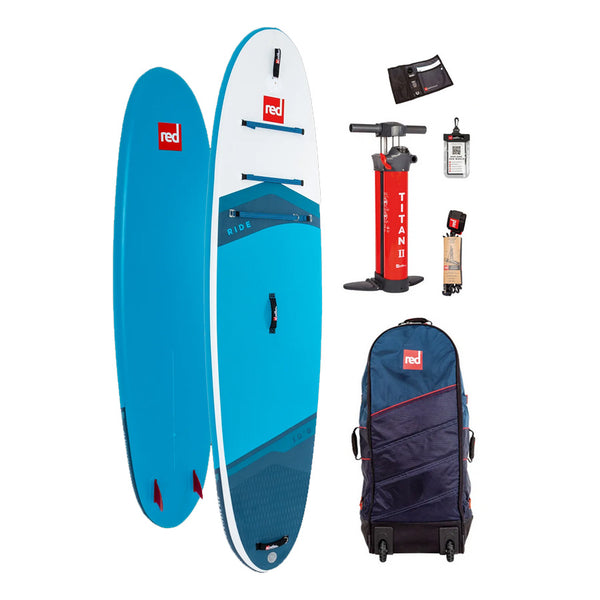 |
Premium all-round beginner and family use | A proven all-round shape with strong brand support and a reliable feel underfoot. |
| Fanatic Fly Air 10'4 Pure | 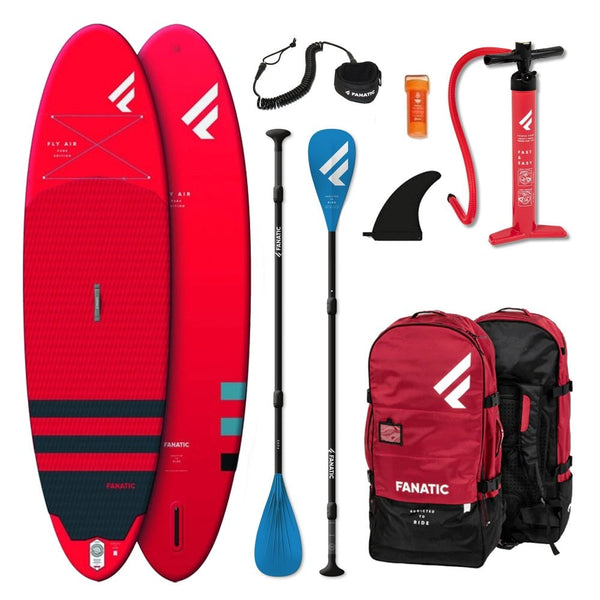 |
Value-led first board from a major watersports brand | A stable, simple package for relaxed paddling, beach days and first SUP sessions. |
| Moloko 10'6 Alto | 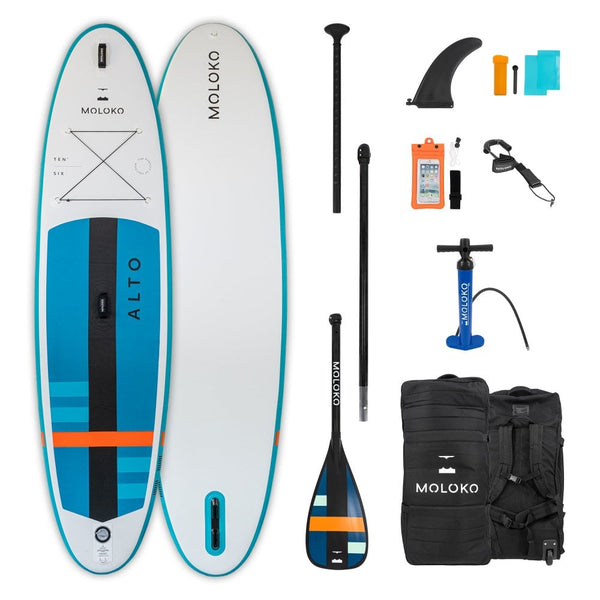 |
All-round value with a strong package | A practical 10'6 x 32 board for general paddling, families and first-time buyers. |
All-round paddleboards: the best first board for most people

An all-round inflatable paddleboard is the right choice if you want one board for learning, family paddling, holidays, calm rivers, sheltered coastal paddles and relaxed time on the water.
Most all-round boards have a rounded nose, plenty of width and a stable platform underfoot. They are not designed to be the fastest boards on the water, but they are designed to make paddling feel easier when you are still building confidence.
Choose an all-round board if you are new to SUP, want a board that several family members can use, or want something simple and dependable for general UK paddling.
Good starting points include the Red Paddle Co 10'6 Ride for a proven premium all-rounder, the Fanatic Fly Air 10'4 Pure for a strong-value package from a major watersports brand, and the Moloko 10'6 Alto if you want a capable all-round package with a strong price-to-performance balance.
For more help comparing this type of board, read our stand up paddleboard buying guide or browse the full all-round paddleboard collection.
Touring paddleboards: better glide for distance and progression
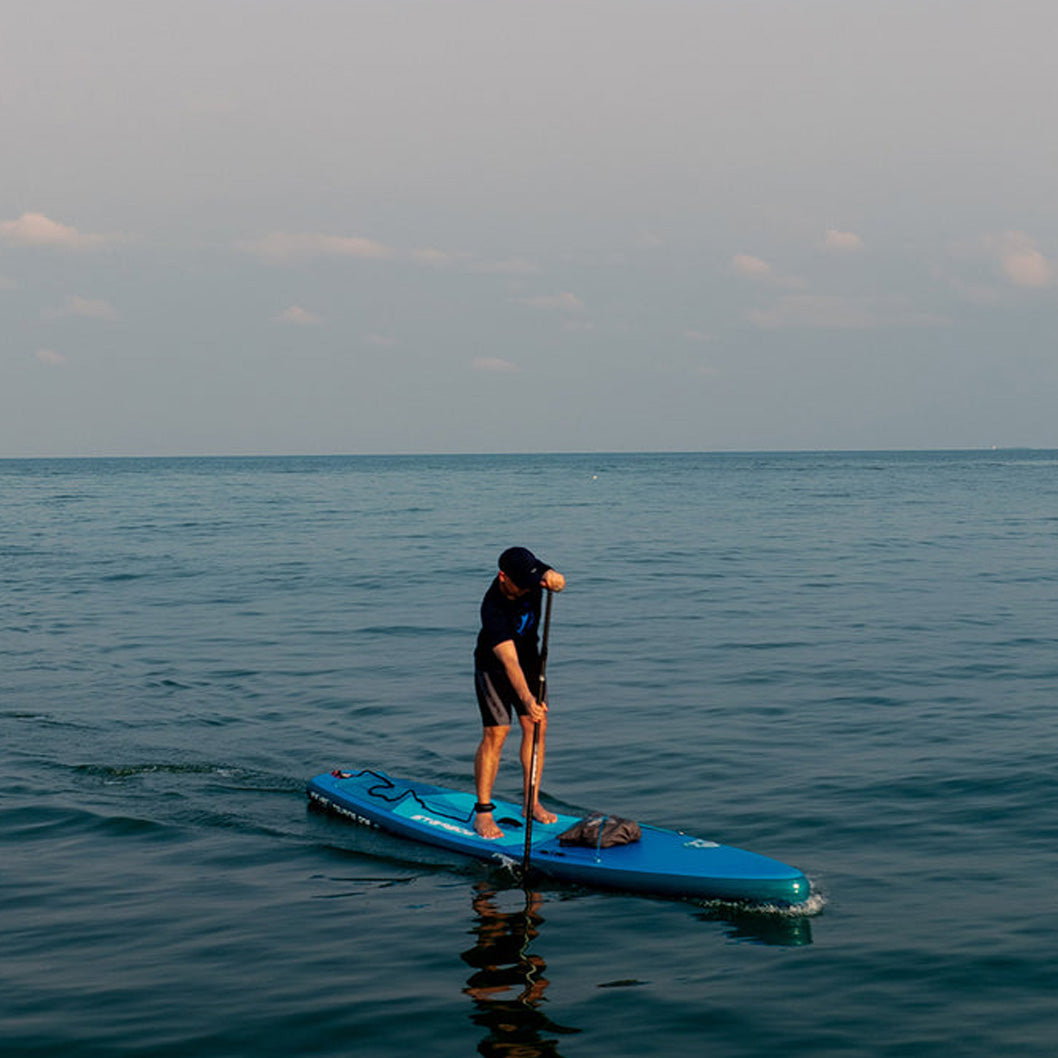
A touring inflatable paddleboard is usually longer and has a more pointed nose than an all-round board. That extra length helps the board glide further with each paddle stroke and track straighter, so you waste less energy correcting your direction.
Touring boards are ideal if you paddle on rivers, canals, estuaries, lakes or sheltered coastal routes and want to go further without feeling like you are fighting the board.
Choose a touring board if you already enjoy SUP and want more glide, if you paddle with friends who are moving faster than you, or if you are planning longer trips where efficiency matters.
Good options include the Fanatic Ray Air Enduro, Starboard Touring Deluxe Lite, Starboard Touring Deluxe Single Chamber and SIC Maui Tao Air Glide Tour 12'6.
For deeper advice, read our Fanatic touring paddleboard guide, our Starboard Touring Deluxe Lite 2026 size guide, or browse our full touring paddleboards collection.
Current standout touring value: Starboard Touring Deluxe Lite ONE Package
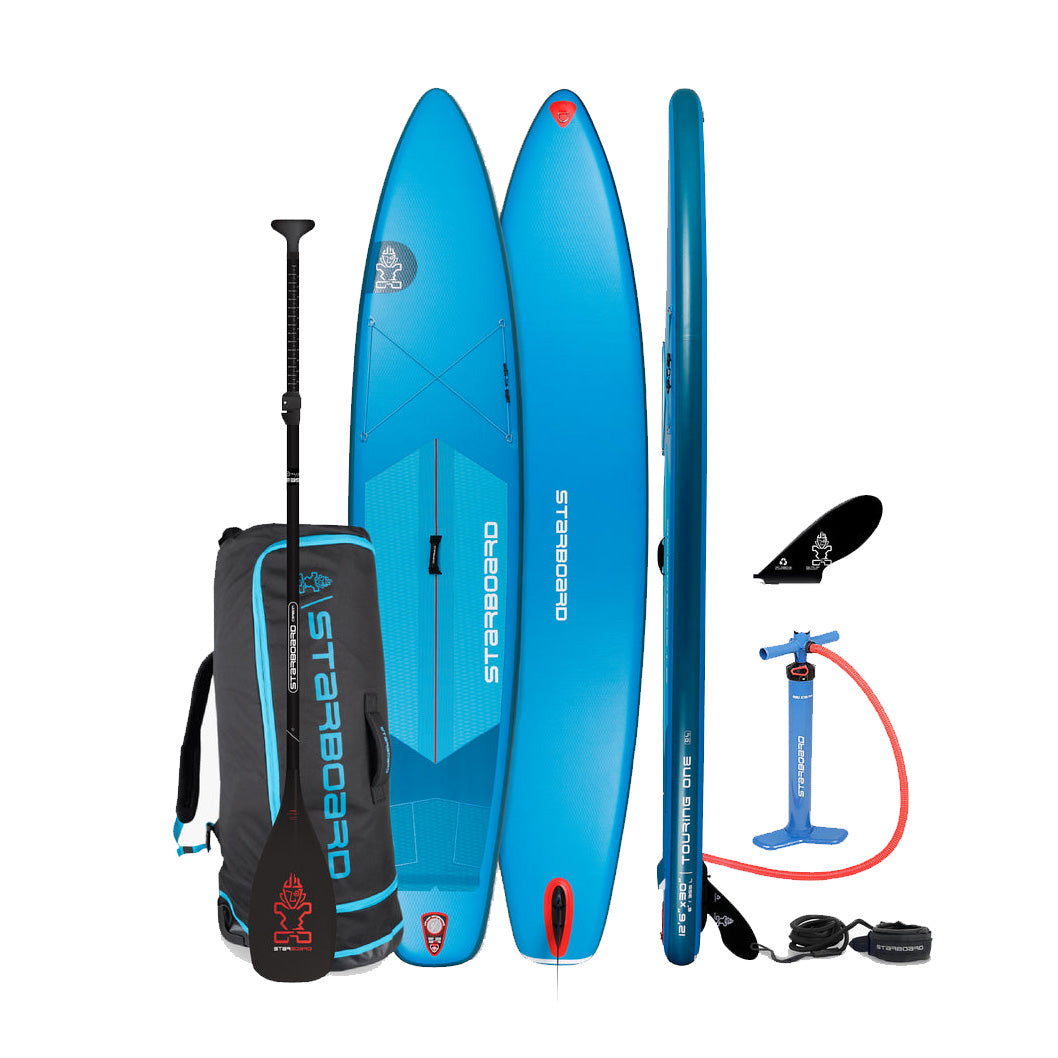
One of the strongest commercial opportunities at the moment is the Starboard 12'6 Touring Deluxe Lite ONE Package. It is the sort of board that makes sense for paddlers who have outgrown a short all-round SUP and now want better glide, better tracking and a more efficient board for longer paddles.
The key point is that it gives customers a proper 12'6 touring outline in a complete package, without jumping straight into a premium-price touring setup. That makes it a very easy board to recommend for rivers, canals, harbours, lakes and sheltered coastal exploring.
Choose this if you want a genuine step up from your first paddleboard, but still want a package that feels approachable and sensible.
Sport and performance boards: when you have outgrown your first SUP
Many paddlers start on a stable all-round board, then realise they want more glide, better tracking and a livelier feel. That is where sportier inflatable SUPs make sense.
A board such as the Red Paddle Co 11'3 Sport sits in that useful middle ground. It is still manageable, but it gives a cleaner, more efficient feel than a classic all-round board.
This type of board suits paddlers who are comfortable standing, want to paddle further, and feel their first board is starting to hold them back.
For a plain-English explanation of how length, width, rocker, fins and stiffness affect speed, read our guide to what makes a paddleboard fast.
Race boards: fast, efficient, but not always beginner-friendly
Race and fitness boards are designed to be efficient. They are usually longer, narrower and more technical than all-round boards. In the right hands, they feel quick and rewarding. In the wrong conditions or for a nervous beginner, they can feel unstable and frustrating.
Choose a race inflatable SUP if speed, fitness paddling or racing is the goal and you are already confident on the water. If you are still learning, a touring board will usually be a better stepping stone.
You can browse our race paddleboards, or speak to us before buying if you are unsure whether to move straight into a race shape.
What size inflatable paddleboard do you need?
Board size is not just about your height. Your weight, confidence, balance, kit, water conditions and intended use all matter.
As a simple guide, many adult beginners will be well served by a board around 10'6 to 10'8 long and around 32 inches wide. That gives a good balance of stability and ease of use.
If you are taller, heavier, less confident, or want to carry a child, dog or picnic kit, it is usually worth adding more length, width or volume. A slightly larger board can feel much more relaxed and stable.
If you want to paddle further or faster, do not just go wider. Width adds stability, but it can also make the board slower and harder to paddle efficiently. In that case, a longer touring shape is often a better answer than simply choosing the widest board available.
| Paddler / use | Good starting point | Why |
|---|---|---|
| Smaller adult or teenager | 10'0 to 10'6 all-round | Easier to manage, carry and control |
| Average adult beginner | 10'6 to 10'8 all-round | Stable, versatile and forgiving |
| Taller or heavier paddler | 10'8 to 11'6 all-round or touring | More support, glide and confidence |
| Family use with children or a dog | Larger all-round board | More deck space and stability |
| Longer distance paddling | 11'6 to 12'6 touring board | Better glide and straighter tracking |
| Fitness or racing | 12'6 or 14' performance board | More speed and efficiency for confident paddlers |
Width matters, but wider is not always better
Width is one of the biggest factors in how stable a board feels. A 32-inch wide board is a very common all-round size because it gives a useful amount of stability without making the board too slow.
Wider boards can be helpful for nervous beginners, families and heavier paddlers, but they can also feel harder to paddle efficiently because you have to reach further to plant the paddle vertically.
Narrower boards are usually quicker and more efficient, but they require better balance and cleaner technique. That is why many touring and race boards feel faster, but less forgiving.
The main difference is simple: width gives stability, length gives glide, and stiffness helps turn your effort into forward movement.
Construction: why two boards the same size can feel totally different
Two inflatable paddleboards can be the same length and width on paper, but feel completely different on the water. Construction is a big reason why.
A better construction usually means improved stiffness, better rail shape, cleaner glide and a more solid feel underfoot. A cheaper construction can still be usable for light, casual paddling, but it may flex more, paddle slower and feel less composed in choppy water.
The key construction points to look at are:
- Drop-stitch core: the internal structure that allows the board to inflate to pressure and hold its shape.
- Rail construction: the side walls of the board, which play a big part in stiffness and durability.
- Layering: single-layer boards are often lighter and cheaper; reinforced or laminated constructions tend to feel more solid.
- Stiffening systems: battens, stringers or carbon rails can make a board feel more efficient.
- Weight: lighter boards are easier to carry, but the best construction is about the balance between weight, stiffness and durability.
For a detailed example of how construction affects feel, read our Red Paddle Co construction guide covering MSL, MSL800 and MSL1000.
Do not buy purely on price or fake RRP
There are some genuinely strong paddleboard deals available, especially when brands clear previous-season stock or retailers reduce end-of-line packages. There are also plenty of boards using inflated RRPs, vague specifications and marketing that does not tell you much about how the board will actually paddle.
A low price is not automatically bad. A high RRP is not automatically meaningful. What matters is whether the board suits your weight, use and conditions, and whether the brand, retailer and package are good enough to support you after purchase.
Before buying a very cheap inflatable SUP, ask:
- Is the board the right size for my weight and use?
- Is the width sensible, or has it just been made very wide to feel stable?
- What construction does it use?
- Is the paddle usable, or will I want to upgrade immediately?
- Does the package include a proper leash, pump, fin and bag?
- Can I get spares, warranty support and advice if something goes wrong?
If you want value without taking a gamble, look at recognised watersports brands in our inflatable paddle boards collection. Sale and clearance boards can be excellent buys when they are the right board for you.
The paddle is not an afterthought
The paddle is your engine. A better paddle can make more difference than many people expect, especially once you paddle for longer than a quick splash around.
Basic aluminium paddles are durable and affordable, but they are usually heavier. Fibreglass and hybrid paddles tend to feel lighter and nicer to use. Carbon paddles are lighter again and can feel more efficient for touring, fitness and regular paddling.
If your budget allows, it is often better to buy a sensible board and a better paddle than to spend everything on the board and use the cheapest paddle in the package.
For more detail, read our Red Paddle Co SUP paddles buying guide or browse our SUP paddles collection.
What should come in an inflatable SUP package?
Package contents vary by brand and model, so always check the individual product page. As a general rule, a complete inflatable SUP package may include:
- The inflatable paddleboard
- A carry bag or backpack
- A pump
- A fin or fin set
- A leash
- A paddle, depending on the package
- A repair kit or service kit
Some premium boards are sold as board-only packages, because regular paddlers often already own a pump, paddle and leash. Other boards are sold as complete packages, which can be better for a first-time buyer.
Do not assume every package includes the same accessories. If you are unsure, speak to us before ordering and we will help you check what is included.
The accessories that are genuinely worth considering
You do not need every accessory on day one, but a few pieces of kit make paddling safer, easier and more enjoyable.
| Accessory | Why it matters | Shop |
|---|---|---|
| Buoyancy aid | Important safety kit, especially for beginners, families and open water | Buoyancy aids |
| Correct leash | Keeps you connected to your board; leash type should match the water you paddle | SUP leashes |
| Electric pump | Makes regular paddling much easier, especially for families or multiple boards | SUP pumps |
| Waterproof phone case or dry bag | Keeps your essentials protected and your phone accessible if needed | Waterproof bags |
| Wetsuit or changing robe | Useful for UK conditions, cooler days and family paddling | Wetsuits |
For family paddling, also read our kids wetsuits and youth buoyancy aids buying guide.
Leashes and safety: choose the right setup for UK water
A leash is essential, but the right type depends on where you paddle.
For open, non-flowing water such as sheltered lakes or calm coastal bays, a coiled ankle or calf leash is commonly used. For moving water, tidal flow, rivers or places where there is a snagging risk, a quick-release waist leash is usually the safer choice because it can be released under load.
You should also wear a suitable buoyancy aid, check the weather, understand the tide if paddling near the coast, avoid offshore winds and carry a means of calling for help.
Safety kit is not there to make paddling complicated. It is there so you can relax and enjoy the water with confidence.
Best inflatable paddleboards by customer type
Best first inflatable paddleboard for most beginners
Choose a stable all-round inflatable SUP from a proper watersports brand. The Red Paddle Co 10'6 Ride is a benchmark premium all-round board. The Fanatic Fly Air 10'4 Pure is a strong-value option, while the Moloko 10'6 Alto gives a broad all-round package at an attractive price point.
Best inflatable paddleboard for family use
Choose a slightly larger all-round board with plenty of width and volume. The Red Paddle Co 10'8 Ride is a popular choice for bigger riders, family paddling and extra stability.
If you are comparing Moloko sizes, read our Moloko 10'6 Alto vs 10'8 Alto SUP comparison.
Best inflatable paddleboard for heavier paddlers
Do not simply buy the cheapest 10'6 board and hope for the best. Heavier paddlers often benefit from more volume, more stiffness and a board with better glide. A larger all-round board or a touring board will usually feel calmer and more efficient.
The right choice depends on your confidence and where you paddle. For relaxed family use, go larger and stable. For distance, consider a touring shape.
Best inflatable paddleboard for longer distance paddling
Look at touring boards. The Fanatic Ray Air Enduro, Starboard Touring Deluxe Lite, Starboard Touring Deluxe Single Chamber and SIC Maui Tao Air Glide Tour 12'6 are all worth considering depending on budget, stock and the type of paddling you want to do.
Best step-up board after your first SUP
If you already own a basic all-round inflatable and want something that glides better without jumping straight into a narrow race board, the Red Paddle Co 11'3 Sport is a very sensible step-up option.
Best value inflatable paddleboard deals
Good value depends on current stock, offers and suitability. Sale models such as the JP Australia AllroundAir SL, O’Brien Kona 10'6, Jobe Varna 11'0 Lite and selected Fanatic, SIC and Moloko boards can represent excellent value when they match the paddler properly.
Always check the live product page for current price, stock status and package contents, as offers and availability can change quickly.
Inflatable SUP or hard paddleboard?
Inflatable paddleboards are the best choice for most first-time buyers because they are easier to store, easier to transport and far more practical if you do not have garage space or roof bars.
Hard paddleboards still have their place. They can offer better performance, sharper handling and a more direct feel, especially for racing, surf SUP and committed paddlers. The trade-off is storage, transport and day-to-day practicality.
For a full comparison, read our guide: inflatable SUP or hard shell SUP?
UK paddling conditions: what matters in the real world
UK paddling is not always flat, warm and windless. A board that feels fine in a swimming pool-style product video can feel very different in tidal flow, harbour chop, gusty wind or a bumpy estuary.
For most UK paddlers, the best board is not the fastest or the cheapest. It is the board that gives enough stability to relax, enough stiffness to paddle efficiently, and enough glide for the places you actually want to go.
If you paddle mainly on sheltered lakes and calm rivers, an all-round board may be perfect. If you paddle estuaries, canals or longer routes, a touring board will often make more sense. If you are coastal paddling, pay close attention to weather, tide, leash choice and your own ability.
Try before you buy at Woodmill

The easiest way to avoid buying the wrong inflatable paddleboard is to try a few side by side.
At the SUP Company Test Centre at Woodmill in Southampton, you can test different paddleboards and paddles on sheltered water with advice from our team. That gives you a much clearer feel for stability, glide, tracking, stiffness and paddle comfort than reading specifications alone.
Our demo fee is refundable against a qualifying paddleboard purchase, making it a sensible step if you are investing in your first proper board or upgrading from a basic package.
If you are unsure, bring us your height, weight, ability level, where you paddle and what you want the board to do. We will help narrow the choice properly.
Finance, delivery and getting the right support
Finance options are available on qualifying orders, which can be useful when investing in a complete setup rather than compromising on the wrong board, paddle or safety kit.
Delivery options and times can vary by product, stock position and location, so check the current product page or contact the team if timing matters.
The bigger point is this: a paddleboard is not just a box. Good advice before you buy, proper support afterwards, access to spares and the chance to test kit can make a huge difference to how much you enjoy your time on the water.
Useful SUP Company guides to read next
- Stand up paddleboard buying guide
- Inflatable SUP or hard shell SUP?
- What makes a paddleboard fast?
- Red Paddle Co constructions explained
- Red Paddle Co SUP paddles buying guide
- Which Fanatic touring paddleboard should you choose?
- Starboard Touring Deluxe Lite 2026 size guide
- Moloko 10'6 Alto vs 10'8 Alto comparison
- Jobe paddle board buying guide
- Kids wetsuits and youth buoyancy aids buying guide
FAQs
What size inflatable paddleboard should a beginner buy?
Most adult beginners should start by looking at an all-round inflatable paddleboard around 10'6 to 10'8 long and around 32 inches wide. Taller, heavier or less confident paddlers may benefit from a larger board with more volume and stability.
Is a 10'6 paddleboard right for everyone?
No. A 10'6 all-round board is a popular starting point, but it is not perfect for everyone. Heavier paddlers, family users, people carrying kit or anyone wanting better glide may be better on a larger all-round board, sport board or touring SUP.
Should I buy an all-round or touring paddleboard?
Choose an all-round board if you are learning, paddling casually or sharing the board with family. Choose a touring board if you want to paddle further, track straighter and cover distance more efficiently.
Are cheap inflatable paddleboards worth buying?
Some cheaper boards are fine for light, casual use, but very cheap packages often compromise on stiffness, paddle quality, accessories and support. A good sale board from a recognised watersports brand can be a better buy than an unknown board with a fake high RRP.
How much should I spend on my first inflatable paddleboard?
Spend enough to get the right size, a suitable construction and a package that will support your paddling. The cheapest board can become expensive if it is unstable, slow, poorly made or quickly outgrown. Sale and clearance boards can offer strong value when they genuinely suit you.
Is an inflatable paddleboard better than a hard paddleboard?
For most first-time buyers, an inflatable paddleboard is more practical because it is easier to store, transport and carry. Hard boards can offer better performance for racing, surf and committed paddlers, but they need more storage space and transport planning.
What is the best inflatable paddleboard for heavier paddlers?
Heavier paddlers should look for enough length, width, volume and stiffness. A larger all-round board or a touring board will usually feel better than an undersized cheap 10'6 package. The best choice depends on where you paddle and how confident you are.
Does paddleboard construction really matter?
Yes. Construction affects stiffness, weight, durability and how efficient the board feels on the water. Better constructions usually flex less and feel more composed, especially for heavier paddlers, longer distances and choppier UK conditions.
Should I upgrade the paddle in my SUP package?
If you plan to paddle regularly, yes, it is worth considering. A lighter, stiffer paddle can reduce fatigue and make the board feel more efficient. The paddle is your engine, so it should not be treated as an afterthought.
What leash should I use for paddleboarding?
For open, non-flowing water, many paddlers use a coiled ankle or calf leash. For moving water, tidal areas, rivers or snag risks, a quick-release waist leash is usually the safer choice. If you are unsure, ask for advice before paddling.
Can I try inflatable paddleboards before buying?
Yes. You can book a session at The SUP Company Test Centre at Woodmill in Southampton to compare suitable boards and paddles on sheltered water before choosing. It is one of the best ways to avoid buying the wrong board.
Do you offer finance on inflatable paddleboards?
Finance options are available on qualifying orders. This can be useful when buying a complete setup, especially if it helps you choose the right board, paddle and safety kit rather than compromising on the wrong package.
Final advice: buy the board that suits your paddling, not just the best deal
The best inflatable paddleboard is not the same for everyone. A beginner family board, a touring board, a compact travel SUP and a race board are all designed for different jobs.
Start with where you will paddle, who will use the board, how much stability you need and whether you want to progress. Then look at size, shape, construction, package contents and support.
If you would like help choosing, browse our inflatable paddle boards, book a session at the SUP Test Centre, or contact The SUP Company team with your height, weight, ability and where you plan to paddle. We will help you get it right first time.