

Paddleboard Width Explained: Stability, Speed and Why 32” Is Not Always Better

Width is one of the biggest reasons paddleboards feel stable. It is also one of the biggest reasons some boards feel slow.
Many paddlers start on wide boards, which is sensible. But once you improve, the right width is about balance between stability, speed, tracking and conditions.
Why trust this advice?
We are not writing this as a brand brochure. The SUP Company is a specialist UK watersports retailer with real shops, real paddlers in the team and the Woodmill SUP Test Centre on sheltered water in Southampton. That means we can help customers feel the difference between board lengths, widths, constructions and paddles rather than asking them to guess from a spec sheet.
The short answer
Wider boards usually feel more stable, but they also create more drag. Progressing paddlers often benefit from moving slightly narrower, provided the board still has enough length, volume and stiffness for their weight and conditions.
Signs this topic matters to you
- Your board feels very stable but slow.
- You want to paddle longer distances.
- You are choosing between 30”, 32” and 34” boards.
- You are heavier and unsure whether width or volume matters more.
Plain-English buying advice
Width gives initial stability because there is more board under your feet. That is useful when learning, paddling with children or using the board as a floating platform.
The downside is drag. A very wide board pushes more water and can feel harder to keep moving. This is why performance touring and race boards are narrower than beginner all-round boards.
A narrower board is only an upgrade if you can stand on it confidently. If you spend the whole session tense, you will not paddle well. Correct width depends on your weight, height, balance, board length, board volume and where you paddle.
Typical SUP widths and who they suit
| Width | Typical feel | Best for |
|---|---|---|
| 34”+ | Very stable but slower. | Family boards, dogs, yoga, nervous beginners and very heavy loads. |
| 32” to 33” | Stable and forgiving. | Most all-round boards and many beginner/intermediate paddlers. |
| 30” to 31” | Good blend of stability and glide. | Sport touring, confident paddlers and regular distance paddling. |
| 28” to 29” | Faster but less forgiving. | Experienced touring, fitness and lighter/confident paddlers. |
| Under 28” | Performance-focused. | Race, advanced fitness and highly skilled paddlers. |
Why 32 inches became common
Around 32” became popular because it works for lots of average adult paddlers learning on all-round boards. It gives easy stability and enough confidence to get started.
The problem is that 32” is not magic. A poorly built 32” board can feel worse than a well-designed 30” board if it flexes, lacks volume or has a poor fin setup.
Width and rider weight
Heavier paddlers do not always need the widest possible board. They need enough volume, stiffness and length, then a width that gives usable stability. For many heavier riders, a longer touring board with proper capacity is better than a short, very wide board.
Products to compare
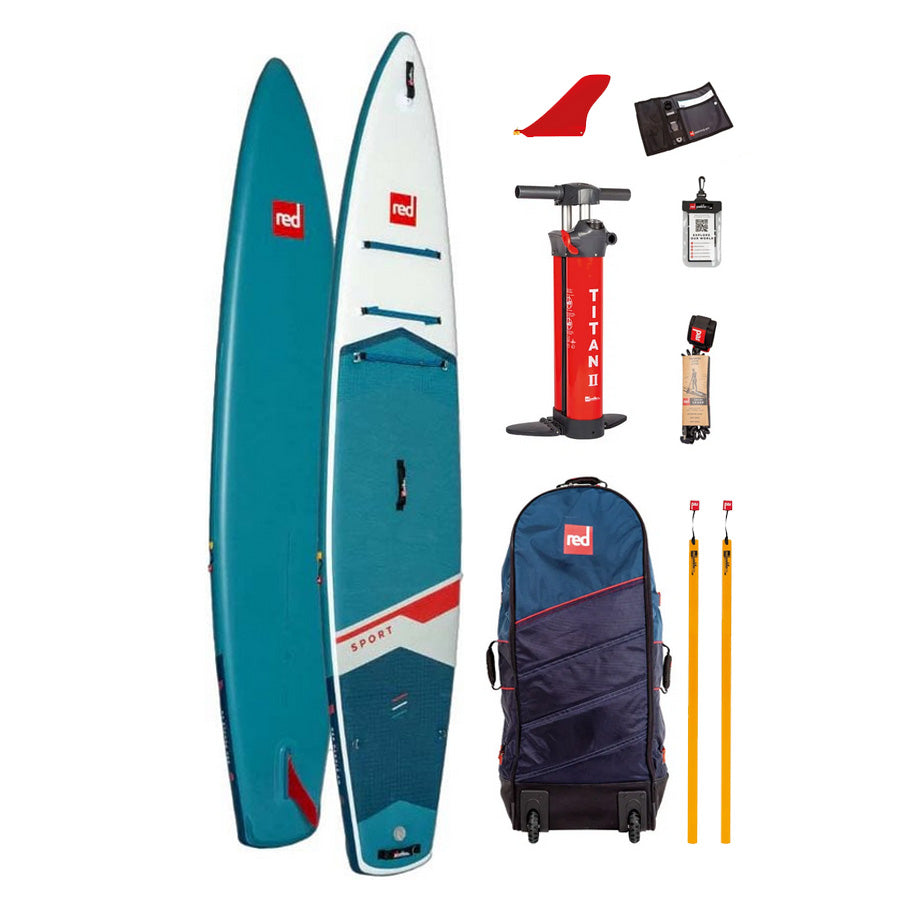
Compare a board such as the Red Paddle Co 11’3 Sport against the Red Paddle Co 12’6 Sport and you will feel how width, length and shape combine. For a bigger touring platform, look at the Red Paddle Co 14’ Voyager.
Recommendations by paddler type
Best for nervous paddlers
Stay wider until you are confident. A board you can relax on will always paddle better than one that feels too twitchy.
Best for progressing all-round paddlers
Move gradually narrower rather than jumping straight to a race width. 30” to 32” often makes sense.
Best for heavier riders
Prioritise length, volume and stiffness as much as width. A long touring board can be much better than a short wide board.
UK paddling notes
For UK paddling, think about wind, tide, chop, launch points and how far you need to carry the board. A board that feels fine for ten minutes on flat water can feel very different on an estuary, canal, harbour or coastal route with a breeze on the way home.
Try before you buy at Woodmill
If you are unsure, the best next step is simple: book a session at the Woodmill SUP Test Centre. Bring your current board details, your weight, where you paddle and what you want the new board to do better. We can then narrow the choice properly and, where suitable demo kit is available, let you compare boards and paddles on the water.

Finance and delivery reassurance
Finance options are available on qualifying orders, which can be useful when investing in a complete setup. Availability, delivery times and finance approval can vary, so contact the team if timing matters.
FAQs
Is a 32” paddleboard stable?
For many paddlers, yes. But stability also depends on length, volume, thickness, shape and stiffness.
Is a 30” SUP too narrow?
Not for a confident paddler on the right length and volume. It can be a very good sport touring width.
Should heavier paddlers always buy 34” boards?
No. A longer, stiffer board with the right volume is often better than simply buying the widest board.
Will a narrower board be faster?
Usually, if you are stable enough to paddle it properly.
Can I test different widths?
Yes. Testing different widths at Woodmill is one of the best ways to avoid buying the wrong board.
Need help choosing?
Browse our paddleboard range, look at the touring paddleboards, or reply with your current board, weight and where you paddle. We will help narrow it down.